

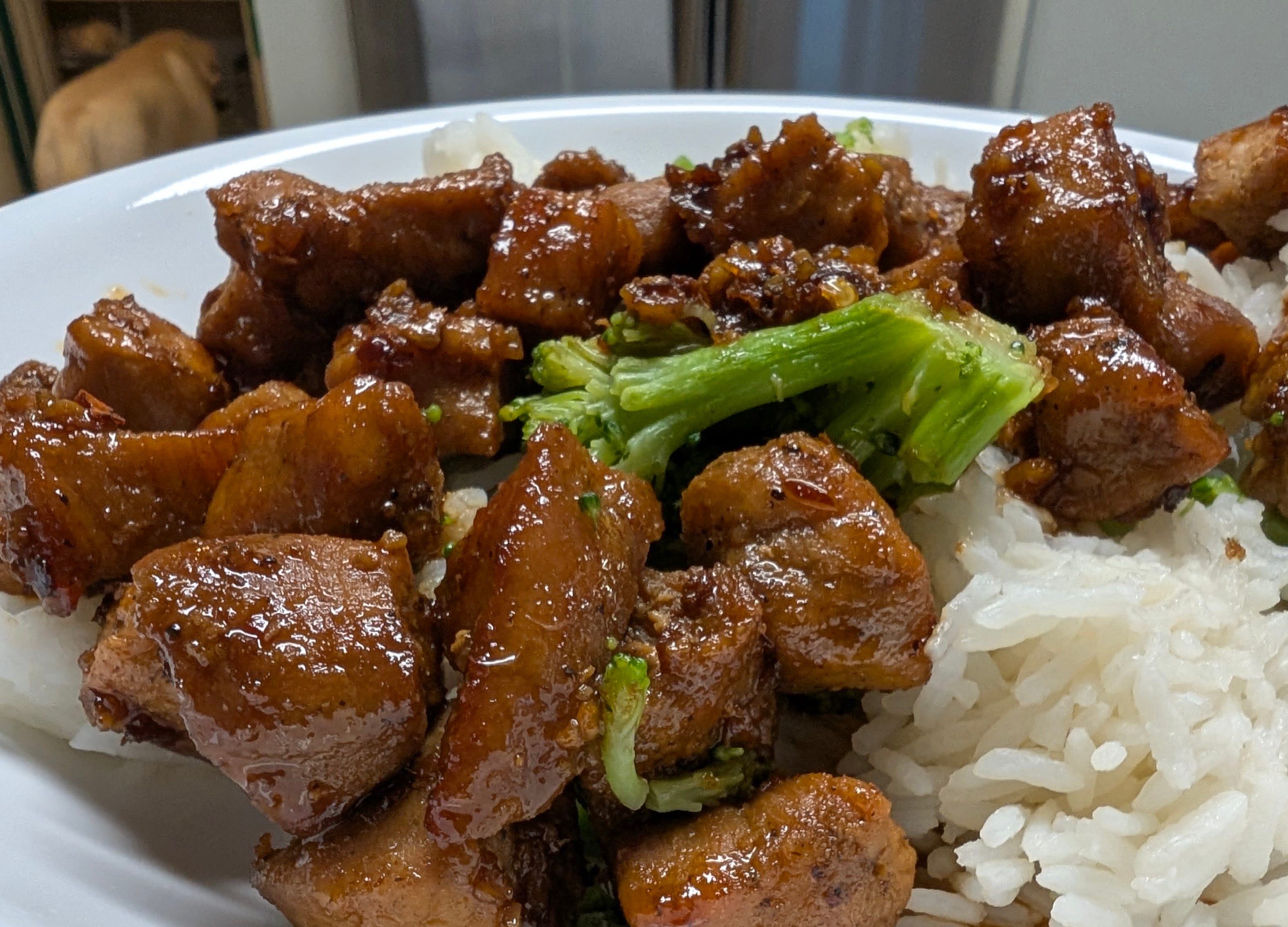
The plate is still full.
Chicken, rice, the thing they usually inhale — pushed into a little pile at the edge of the plate and abandoned. Tryouts are tomorrow. You ask if they’re okay. They say their stomach hurts. And you stand there doing the parent math: bug, or nerves? Push the food, or let it go?
Here’s the thing almost nobody tells you.
It’s not a bug. And it’s not “just” nerves either — not the way we usually mean it, like a mood they could talk themselves out of. What’s happening in your kid’s stomach right now is a physical event. Measurable. Mechanical. It has almost nothing to do with willpower and everything to do with a system that’s been running since long before there were tryouts to be nervous about.
Let me break it down.
When your kid’s brain flags something as a threat — a test, a tryout, a coach with a clipboard and a decision to make — it does not stop to ask whether the threat is a saber-toothed tiger or a JV cut list. It just fires. Heart rate up. Lungs open. Muscles flooded with fuel (Seddon et al., 2020).
And that fuel has to come from somewhere.
So the body makes a trade. It pulls blood away from the systems it doesn’t need in an emergency and routes it to the ones it does — the big muscles, the ones that would sprint or fight. Digestion is first on the chopping block. You don’t (Paridon et al., 2017) need to break down last night’s dinner if you’re about to run for your life. So the gut goes quiet. Blood drains out of it. And that hollow, churning, can’t-take-a-bite feeling your kid is describing? (Neural Mechanisms and Circuitry of the Stress Response, 2021)
That’s the drain. Happening in real time.
Useful if you’re outrunning a bear. Less useful the night before tryouts.
I want you to sit with one word: real. Your kid is not being dramatic. They are not stalling to get out of going. Their nervous system is doing exactly what it was built to do — protect them from danger — and it has simply mistaken a tryout for danger. The stomachache isn’t a performance. It’s a receipt.
Which is why the thing you want to say next almost never works.
“Relax. It’s just a scrimmage. You’ve got this.” Reasonable. Loving. And roughly useless in that moment — because the same threat response that emptied their stomach also turned down the volume on the part of the brain that handles calm reasoning. The thinking brain steps back so the reacting brain can take the wheel. That’s the design, not a malfunction (Where Is Fight or Flight in the Brain?, 2026). So when you hand your anxious kid a logical argument, you’re mailing a letter to an office where nobody’s currently at the desk.
You can’t talk them out of it. The talking part is offline.
But here’s what I love about this system — and why I’m not about to tell you to just white-knuckle through tryout season:
The same nervous system that flipped on has a switch that flips it back off. And unlike reasoning — which is locked behind that offline door — the off switch is something your kid can reach on their own, in the moment, with nothing but their own body. No app. No coach. No pep talk. Just the body’s own signal.
It runs on breath.
That’s where we’re headed Sunday. In the first episode of The Calm Competitor, I walk your athlete through the exact move — the one signal their body already knows how to send that tells the alarm to stand down. It takes about ninety seconds, and they can do it in the car, on the bench, or the night before, staring down a full plate.
For tonight, though, you don’t need the fix. You just need the reframe. So the next time that plate comes back untouched, you’ll know what you’re actually looking at:
The empty stomach isn’t weakness. It’s wiring — and tonight, that wiring is doing its job.
And wiring can be trained.
See you Sunday.
— Dobb
References
Seddon, J. A., Rodriguez, V. J., Provencher, Y., Raftery-Helmer, J., Hersh, J., Labelle, P. R. & Thomassin, K. (2020). Meta-analysis of the effectiveness of the Trier Social Stress Test in eliciting physiological stress responses in children and adolescents. Psychoneuroendocrinology 116. https://doi.org/10.1016/j.psyneuen.2020.104582
(2021). Neural Mechanisms and Circuitry of the Stress Response. OpenStax. https://openstax.org/books/introduction-behavioral-neuroscience/pages/12-2-neural-mechanisms-and-circuitry-of-the-stress-response
Paridon, K. N., Timmis, M. A., Nevison, C. M. & Bristow, M. (2017). The anticipatory stress response to sport competition; a systematic review with meta-analysis of cortisol reactivity. BMJ Open Sport Exerc Med 3(1). https://doi.org/10.1136/bmjsem-2017-000261
(2026). Where Is Fight or Flight in the Brain?. ScienceInsights. https://scienceinsights.org/where-is-fight-or-flight-in-the-brain/